Attic Ductwork or Attic Duct Work. What is the Difference?
Attic ductwork is the HVAC duct system that runs through the attic. Attic duct work refers to the work (like repairs, retrofits, and maintenance) that is performed on your attic ducts.
Types of Attic Ductwork
The type of ductwork in your attic can affect airflow and energy efficiency. The most common options include:
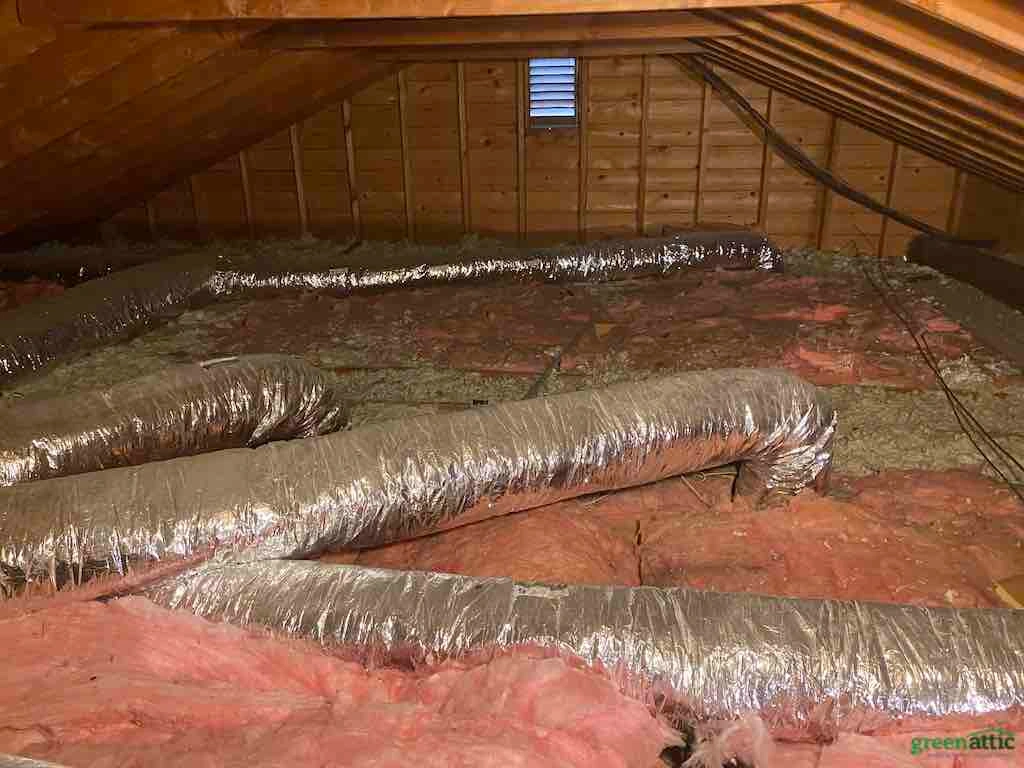
Flexible duct (flex duct) - Easy to route around framing, but it can kink or sag, which restricts airflow. It’s also more likely to leak at connections if not sealed and supported properly.
Rigid metal duct - Provides strong, consistent airflow, especially on longer runs. In an unconditioned attic, it usually needs insulation to reduce heat loss/heat gain and improve efficiency.
Fiberglass duct board - Offers built-in insulation that helps with efficiency. It can be more fragile than metal and may need careful handling and sealing to avoid damage.
How To Insulate Ductwork In Attic
If a furnace is installed in the attic, the ductwork should be surrounded by a completely air-sealed and fire-code compliant room as well as insulated. It is essential to create a tight, well-insulated room to avoid heat loss resulting in the underside of the sheathing temperature warmer than outside air.
This warm sheathing / roof deck will melt snow prematurely resulting in icicles and potential for ice damming as seen in February 2021. Unprecedented amounts of snowfall triggered excessive snow melt on poorly insulated homes across Chicagoland creating a surge in demand for ice dam removal services over a 5-day period.
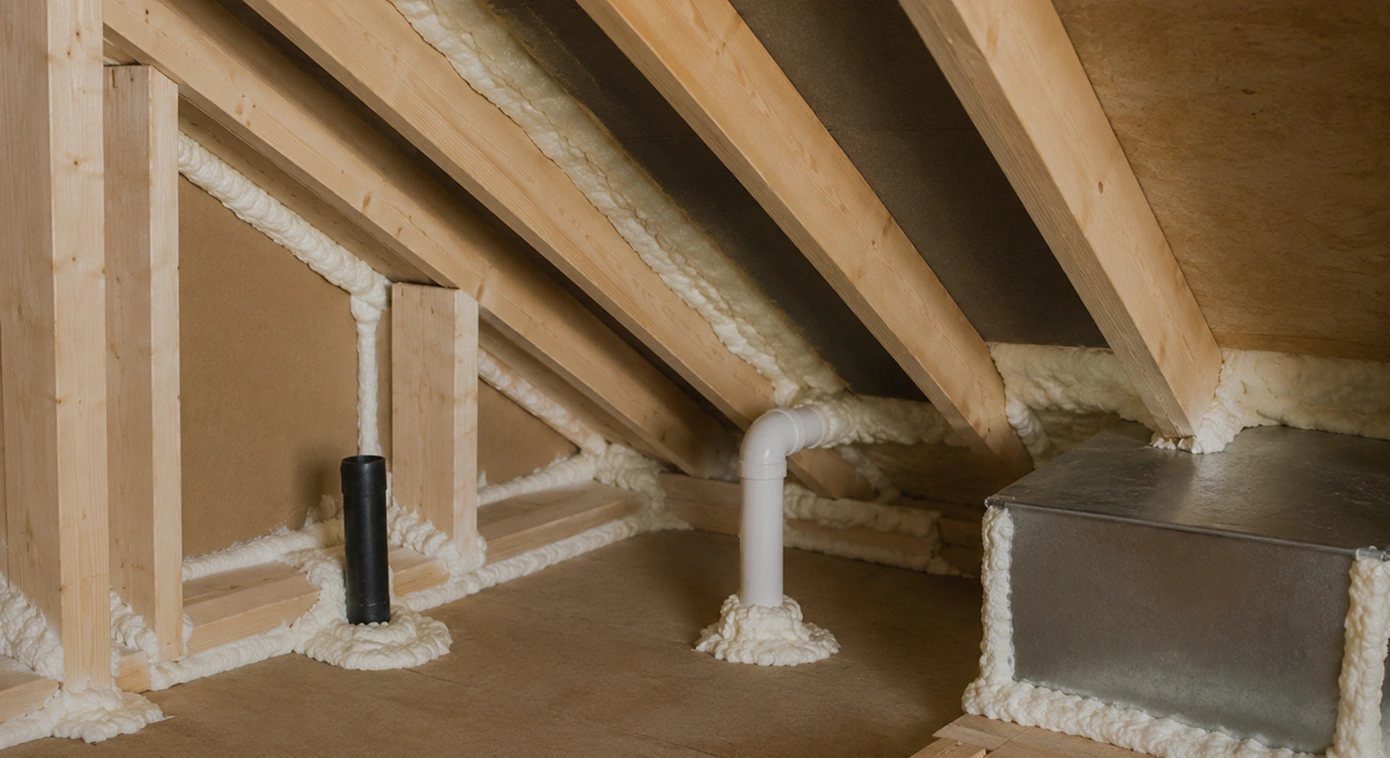
Ductwork installed in accessible attics in humid climates can benefit from closed-cell spray foam. Around 1 inch of foam typically provides about R-6 to R-7 of insulation while also sealing seams and creating a moisture-resistant barrier.
This combination of insulation and air sealing can help reduce energy consumption. Local building codes may require higher R-values (such as R-8 for ducts in attics), so the exact foam thickness should always be verified with your local building official.
Attic Ductwork
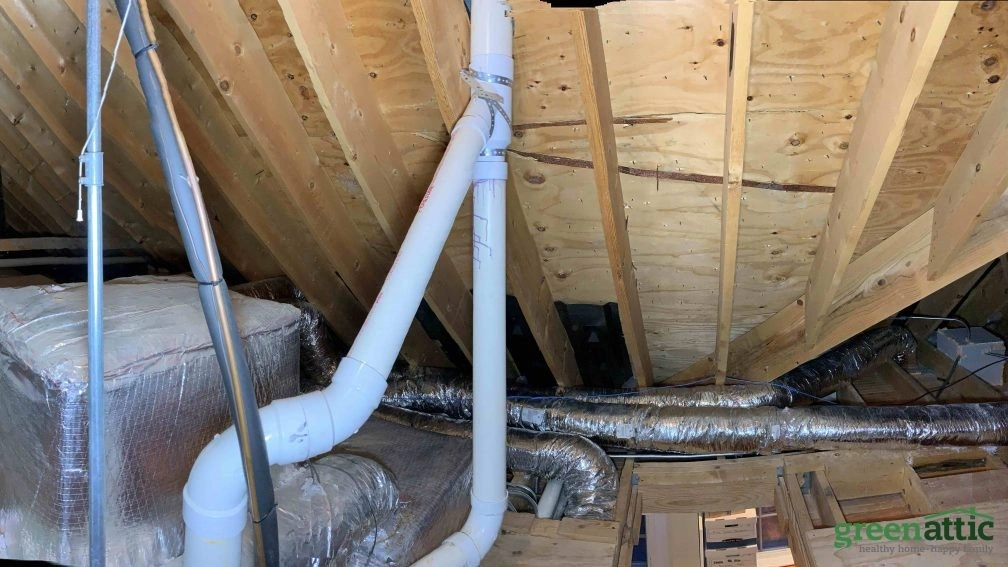
Attics are traditionally unconditioned (meaning not intentionally heated or cooled by electricity or natural gas). This means attic ductwork is carrying heated or cooled air through an unconditioned space, which can reduce efficiency.
Proper attic ventilation helps keep attic temperatures closer to outdoor conditions. This can help limit all sorts of issues such as icicles, mold and humidity in winter, and heat buildup from radiation for a sweltering hot upstairs in the summer.
The attic is not an ideal location for ductwork, particularly for heating. Ideally the heating source would be as low as possible in the room such as floor vents (and the home such as the basement) as the heat will rise naturally through the conditioned space.
Whenever possible, it is best to avoid running ductwork through the unconditioned attic. Here are a few reasons why:
- Conditioned air moves through extreme attic temperatures, increasing heat loss in winter and heat gain in summer.
- Leaky return ducts can pull dusty attic air into the system through seams and gaps.
- Temperature differences can contribute to condensation and excess moisture around ductwork.
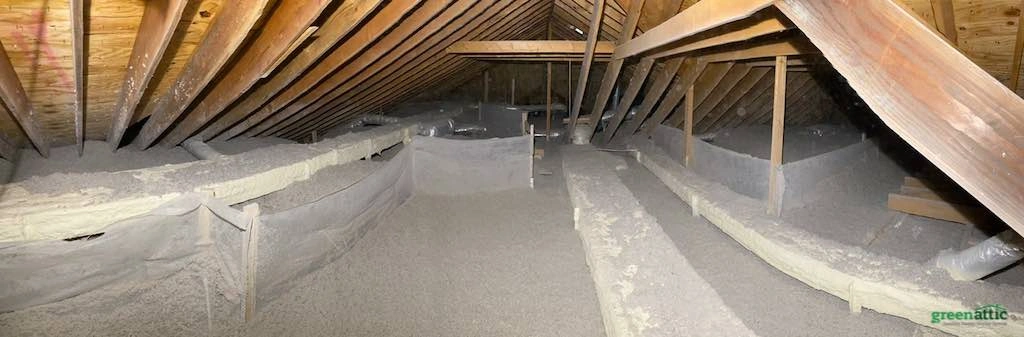
Attic Duct Sealing and Insulation Strategy
Seal and Secure the Ductwork
- Ductwork in unconditioned attics should be installed as low as possible, in direct contact with the attic floor or ceiling plane.
- Ducts running through attic insulation should include a vapor barrier.
- Attic ductwork must be securely supported to prevent sagging and air leakage.
- All duct seams and connections should be airtight.
- When accessible, ducts should be encapsulated with ~1 inch of closed-cell spray foam to seal seams and add thermal resistance.
- Sealing attic ductwork saves energy, saves money month after month, improves efficiency, and comfort.
After Sealing, Add Insulation Above the Ducts
After the attics ducts are sealed they are buried deeply under loose fill cellulose insulation. This prevents additional thermal transfer effectively separating cool air in the summer and warm air in the winter from contact with opposing outdoor temps.
If the Ductwork Is Inaccessible
If the ductwork going through unconditioned spaces is inaccessible, we recommend our licensed experienced HVAC contractors from Green Attic to seal the ductwork from the inside with an aerosol sealing procedure.
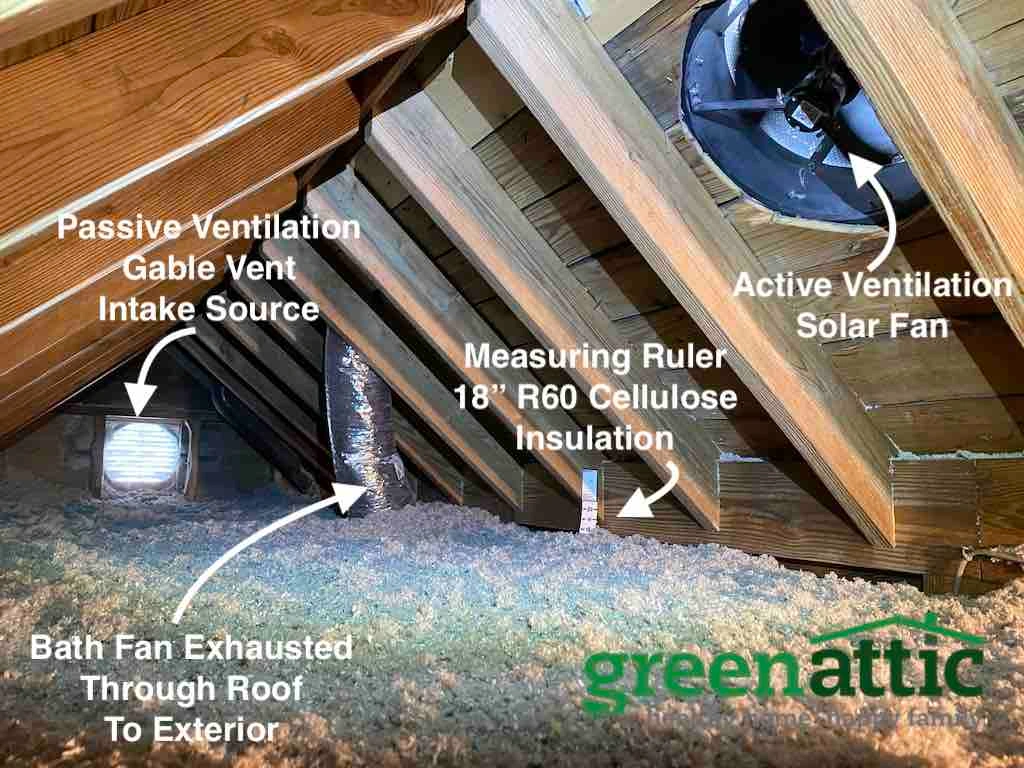
The example below highlights attic ventilation and cellulose depth, two factors that influence attic temperatures and, in turn, ductwork performance after sealing and insulating:
Why This Matters: Attic Heat and Winter Losses
In summer, conditioned air is running through a hot attic. Roof-deck surface temperatures can reach 130–150°F.
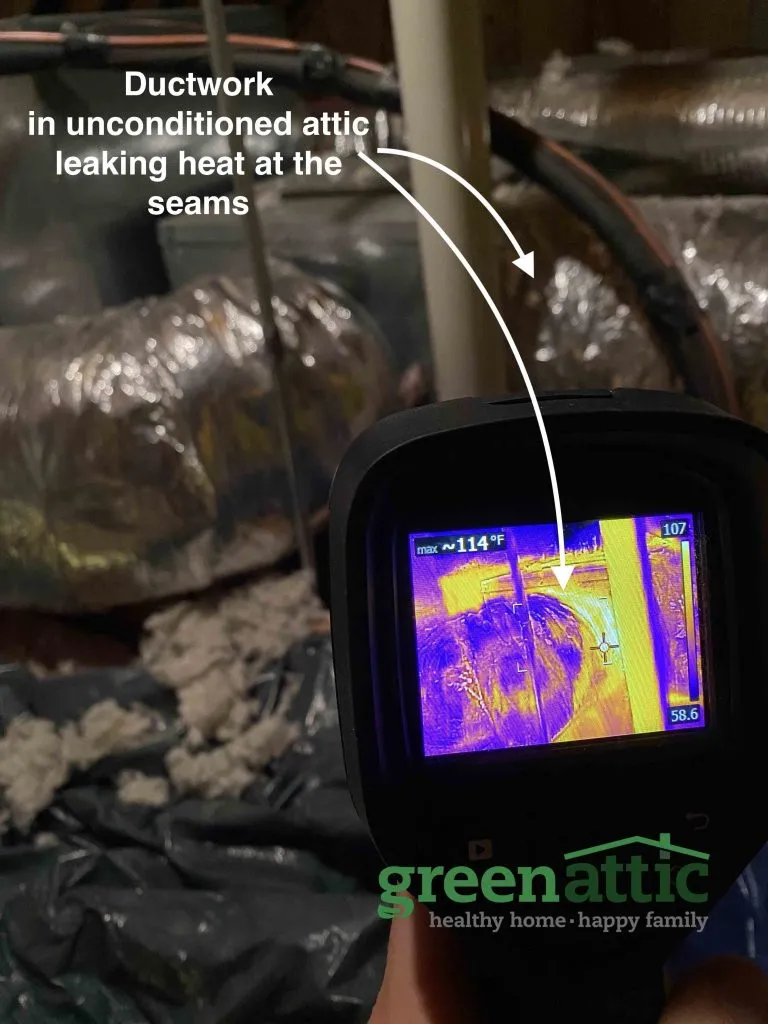
Similarly, in winter, a vented, unconditioned attic is often close to outdoor temperature. Heated supply air may be 120–130°F, but a large percentage of heat can be lost through the duct surface if ducts are leaky or under-insulated.
Ductwork is leaky at the seams by default, so sealing duct connections and adding insulation will improve efficiency, lower heating and cooling costs, and make the home more comfortable.
If a furnace room is installed in the attic, it is important to have a complete pressure barrier and a thermal barrier comparable to R-21 (commonly recommended for exterior walls in Zone 5), along with a code-required fire barrier. This helps prevent heat loss in winter and an overheated mechanical-room environment in summer.
Fill out the contact form on our main page to set an appointment for a free assessment of your attic, and keep in mind the variables of ductwork in attics, making an informed decision for improvement has never been so easy.
Share with the world