
Ice dams can make a roof collapse and cause significant water damage intrusion in the house. In this article, you will learn how proper attic insulation, ventilation, and air sealing help prevent ice dams, what causes them, why icicles are a warning sign, and how to protect the inside of your home from ice dam damage.
How to Insulate Attic to Prevent Ice Dams
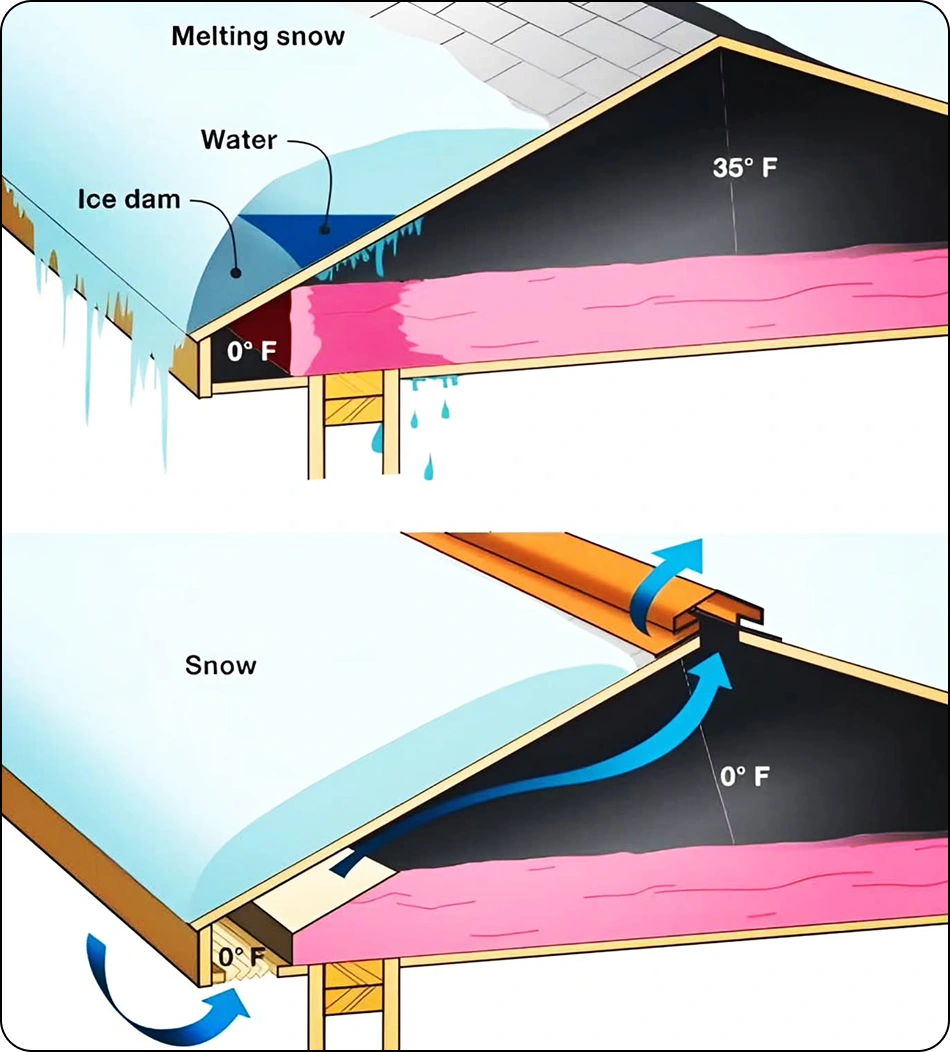
To prevent ice dams, start by air sealing your attic to stop warm air leaks, then add enough insulation (usually R-38 to R-60+) on the attic floor to keep heat inside your home, and make sure you have proper roof ventilation to keep the attic cold:
- Insulation in the ceiling below the attic will prevent warm air from rising up into the attic space to melt snow on the roof. Green Attic installs R-49 to R-60 on traditional attic floors, providing optimal summer and winter thermal diffusion (preventing heat escape in winter and preventing heat intrusion in summer).
- Ventilation under the roof sheeting keeps colder outside air circulating through the attic and prevents it from warming above the freezing point, which would otherwise melt snow on the roof.
- Air sealing around heat leakage paths, such as plumbing, HVAC, and electrical penetrations through the attic floor pressure barrier, is just as important as the insulation itself. Gaps around plumbing pipes and chimneys can be a significant source of heat flow into the attic from the spaces below. This includes bypasses such as the gap between the trim and quarter-round shoe and the gap between the drywall and the top plate.
The benefit of a comprehensive insulation effort is that it not only helps prevent ice dams, but it also reduces energy costs.
But be aware that insulation alone rarely is enough to prevent all ice dams. It needs to be done in conjunction with improved ventilation.
Note: Keep gutters clean. Get rid of all those fall leaves before the snow comes. Also, make sure your downspouts are functioning properly. Melted snow has nowhere to go if the gutters are clogged.
What Causes Ice Dams
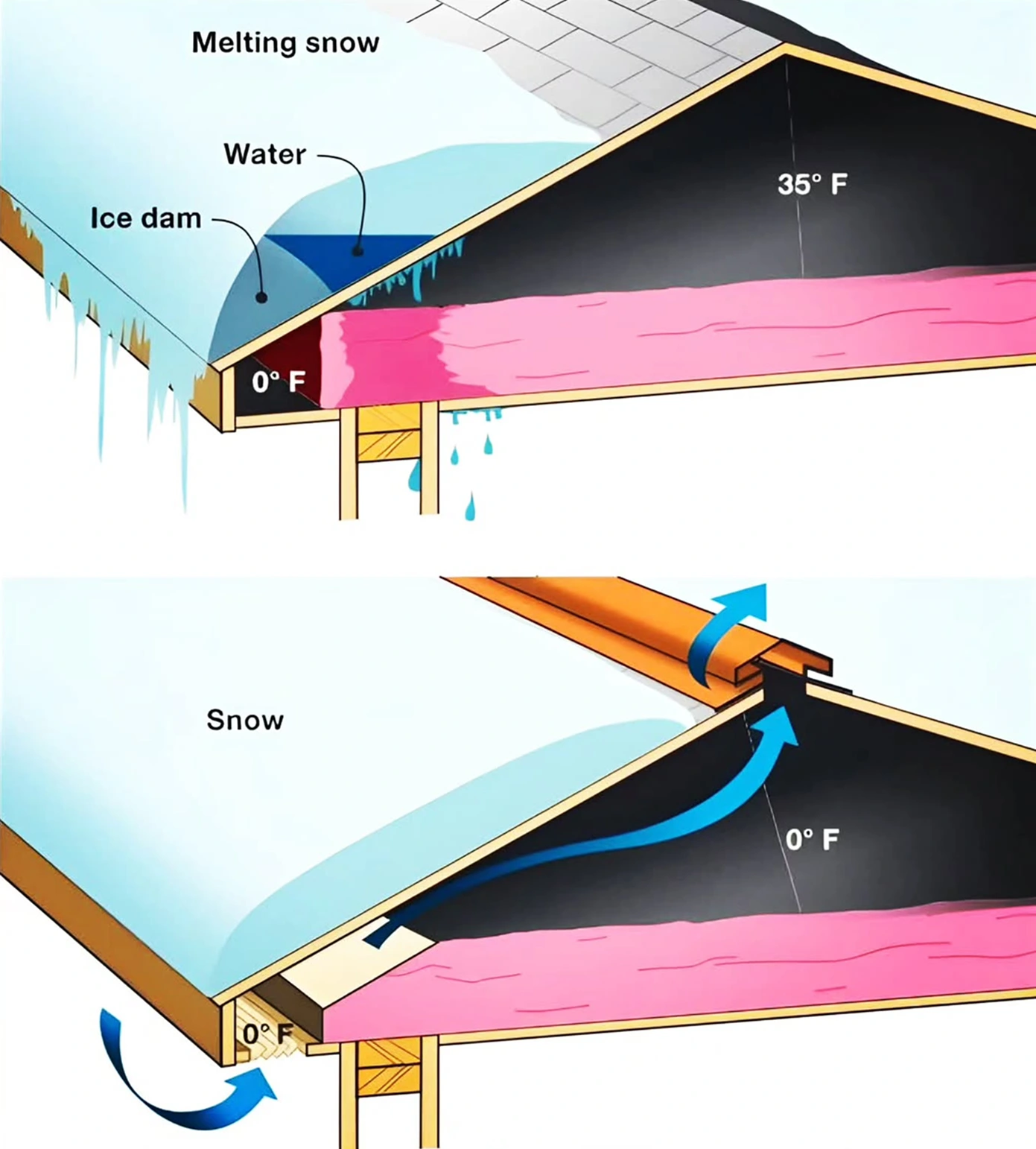
Research from Michigan State University Extension explains that ice dams form when heat from the attic melts snow on the roof, causing water to run down and freeze at the eaves, eventually forming an ice barrier.
As more snow melts, it accumulates behind this barrier; water can then back up under shingles and leak into the home, potentially causing extensive damage to interiors and insulation.
How Do Icicles Form
.webp)
Winter 2021 left us with unprecedented icicles, including property owners who never had ice dams before, and now, in the 2025–2026 winter, we're seeing the same risks return for homes that haven't addressed heat loss and attic insulation.
Icicles form when heat escapes from your home and warms the roof, causing snow to melt and water to run down to the colder edges, where it refreezes and builds up into icicles.
This process is a sign that warm indoor air is leaking into the attic and heating the roof more than it should, rather than allowing it to stay cold. In other words, icicles are not just a winter decoration but often a visible indicator of heat loss and potential ice dam problems.
Note: Insulation will only stop ice dams caused by heat loss from the attic; it will not stop icicles due to natural melting conditions relevant to the outside melting and refreezing temperature in a short period of time. There is a difference between icicles and ice dams. Each home has unique characteristics built by different builders using different materials and methods. Results may vary.
Prevent Ice Dam Damage Inside Your Home
.webp)
The ice backs up under the roof shingles, where it melts again, soaking the roof sheathing and leaking into the attic.
From there, it can seep through the ceiling drywall and show up as stains, drips, or bubbling paint in your living space.
In addition to this interior water damage, large ice dams can be very heavy, damaging gutters and creating a safety hazard for anyone walking below when chunks of ice break loose.
About Green Attic
Green Attic Insulation is a family-owned local company founded in 2009, helping homeowners and businesses improve comfort and cut energy costs for 17+ years. We specialize in retrofitting existing homes and commercial buildings to keep them cooler in summer, warmer in winter, and more efficient year-round.
If you're dealing with roof ice or water leaks in Chicago or the surrounding suburbs, our ice dam removal service can help. Call (847) 929-9492 or fill out the contact form on the main page of GreenAttic.com.
Addition Resources
Want more insights on ice dam removal costs? Check out our detailed articles for more in-depth information:
Average Ice Dam Removal Cost
How To Deal With Ice Dam Roof Leaks
How to Insulate Attic to Prevent Ice Dams
4 Best Cold Weather Tips for Your Home

Share with the world